

Key Takeaways
Why Safety Habits Matter From the Very First Message
Online dating opens up a genuinely exciting world of possibilities - but it also asks you to build trust with strangers, often faster than feels entirely comfortable. The good news is that a handful of consistent habits can dramatically reduce risk without making every interaction feel like a background check.
Whether you're brand new to apps or jumping back in after some time away, safety isn't about suspicion - it's about giving yourself the conditions to date with confidence. If you're just getting started, our guide to your first month of online dating is a great companion to the habits below.
These aren't rigid rules. Think of them as a personal framework you can adapt to your own comfort level and situation - something to return to whenever a new conversation begins.
Guard your personal details early on
In the early stages of chatting with someone new, keep identifying information - your last name, home address, workplace, and daily routines - off the table. This isn't rudeness; it's standard practice. A full name combined with a city is often enough for someone to find a home address, employer, or social media profiles with a basic search.
Use the in-app messaging system for as long as feels right rather than moving to personal phone numbers right away. Many apps now offer features like masked calling precisely for this reason.
Your last name and neighborhood can reveal far more than you intend - keep them private early on.
Do a quick profile check before meeting
Before agreeing to meet, take a few minutes to look over what you actually know about someone. Does their profile feel consistent? Have their stories added up across conversations? A reverse image search - dragging their photo into a search engine's image tool - can flag whether a profile picture belongs to someone else entirely, which is a common sign of a fake account.
This doesn't need to feel like detective work. Think of it as a simple sense-check, the same way you might glance at reviews before trying a new restaurant.
A reverse image search takes under a minute and can immediately reveal a stolen profile photo.
Always choose a public place for first meetings
This is one of the most widely recommended habits for good reason: a busy café, a popular park, or a well-lit restaurant gives you a crowd, exits, and a neutral environment. Avoid going to someone's home - or inviting them to yours - until you've spent real time together and built a foundation of trust over multiple dates.
If your match pushes back against meeting in public or tries to move the first meeting to a private location, that's worth pausing on. Reasonable people understand why this is the norm.
Public first meetings aren't a lack of trust - they're a standard, sensible boundary most people respect.
Arrange your own transportation
Having your own way to get to and from a date - whether that's driving yourself, using a rideshare, or taking public transit - keeps you in control of when you leave. Accepting a ride from someone you've never met puts you in a vulnerable position if the date doesn't go as expected.
This habit also quietly reinforces something important: you don't owe anyone a longer evening than you want. Being able to leave on your own terms, at any point, is worth the extra planning.
Your own ride home means you can leave whenever you're ready - no negotiation required.
Tell someone your plans
Before every first date with someone new, share the key details with a trusted person in your life: where you're going, who you're meeting (even just a first name and the app you met on), and roughly when you expect to be home. A quick follow-up text when you're back takes seconds and gives your support network an easy way to check in if something feels wrong.
Some people go a step further and share their live location with a close friend via their phone's built-in location-sharing feature during a date. This is completely optional, but it's a practical layer of reassurance many daters find useful.
Telling one trusted person your date details costs nothing and provides meaningful peace of mind.
Pay attention to communication patterns
The way someone communicates before a meeting can tell you a great deal. Does the conversation feel reciprocal, or does one person dominate? Are there inconsistencies in what they've shared? Does any part of the messaging feel pressuring, overly intense, or designed to rush intimacy faster than feels natural?
Our piece on how messaging style shapes early dating explores this in more depth. Patterns of communication are data - use them.
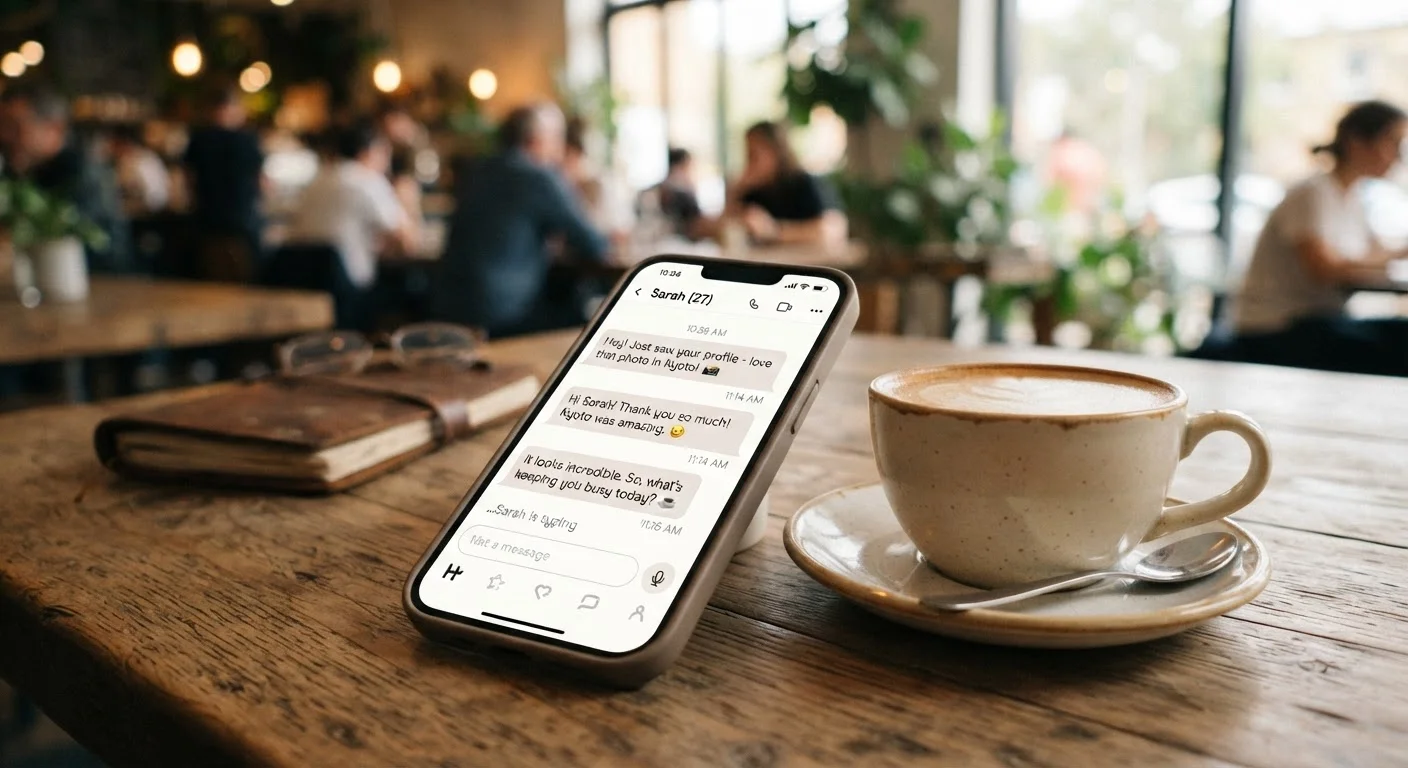
Inconsistencies or pressure tactics in early messages are worth noticing, not explaining away.
Trust your instincts without second-guessing them
If something feels off - a conversation takes a strange turn, a person seems too eager to meet before you're comfortable, or you just can't shake a vague sense of unease - that feeling is worth honoring. You don't need a concrete reason to step back, unmatch, or decline a date.
Gut reactions in unfamiliar social situations often process subtle cues before our conscious mind catches up. Treating your own discomfort as valid information, rather than something to push past, is one of the most protective habits you can build.
You don't owe anyone a reason for stepping back - your instincts are valid information.
Putting It All Together Before You Head Out
Safety habits compound - each one reinforces the others. Protecting your personal details early makes it easier to trust your gut later. Telling a friend your plans takes two minutes and can matter enormously. And checking in with yourself honestly about how an interaction feels is a skill that gets sharper with practice.
Make Safety Habits a Default, Not a Decision
The most effective safety habits are the ones you apply consistently rather than deciding each time whether they feel necessary. Set your defaults once - public first dates, own transportation, telling a friend your plans - and let them run in the background. This frees up your mental energy for the part that actually matters: getting to know someone.
Before any first meeting, it's worth running through a quick pre-date checklist. Our practical readiness checklist covers both the logistics and the mindset side of things. And if you haven't yet defined what you're personally comfortable with, setting personal boundaries before you start dating is a solid place to begin.
Online dating can be a genuinely positive experience. These habits aren't meant to make it feel heavy - they're meant to free you up to actually enjoy it.