

Key Takeaways
Our Verdict
The good debt vs. bad debt framework gives beginners a helpful mental model, but it shouldn't be used as a final judgment. The true cost of any debt depends on interest rates, loan terms, your income stability, and how the debt fits into your broader financial picture. Use the framework as a first filter, not a last word.
| Best for | Recommended |
|---|---|
| Those new to credit who need a simple starting framework | Good debt vs. bad debt as an initial filter |
| Those ready to evaluate debt more precisely | Analyzing interest rate, term, and cash flow impact directly |
| Those carrying multiple debts and weighing repayment order | Structured repayment strategies based on rate or balance |
Where the Good Debt vs. Bad Debt Idea Comes From
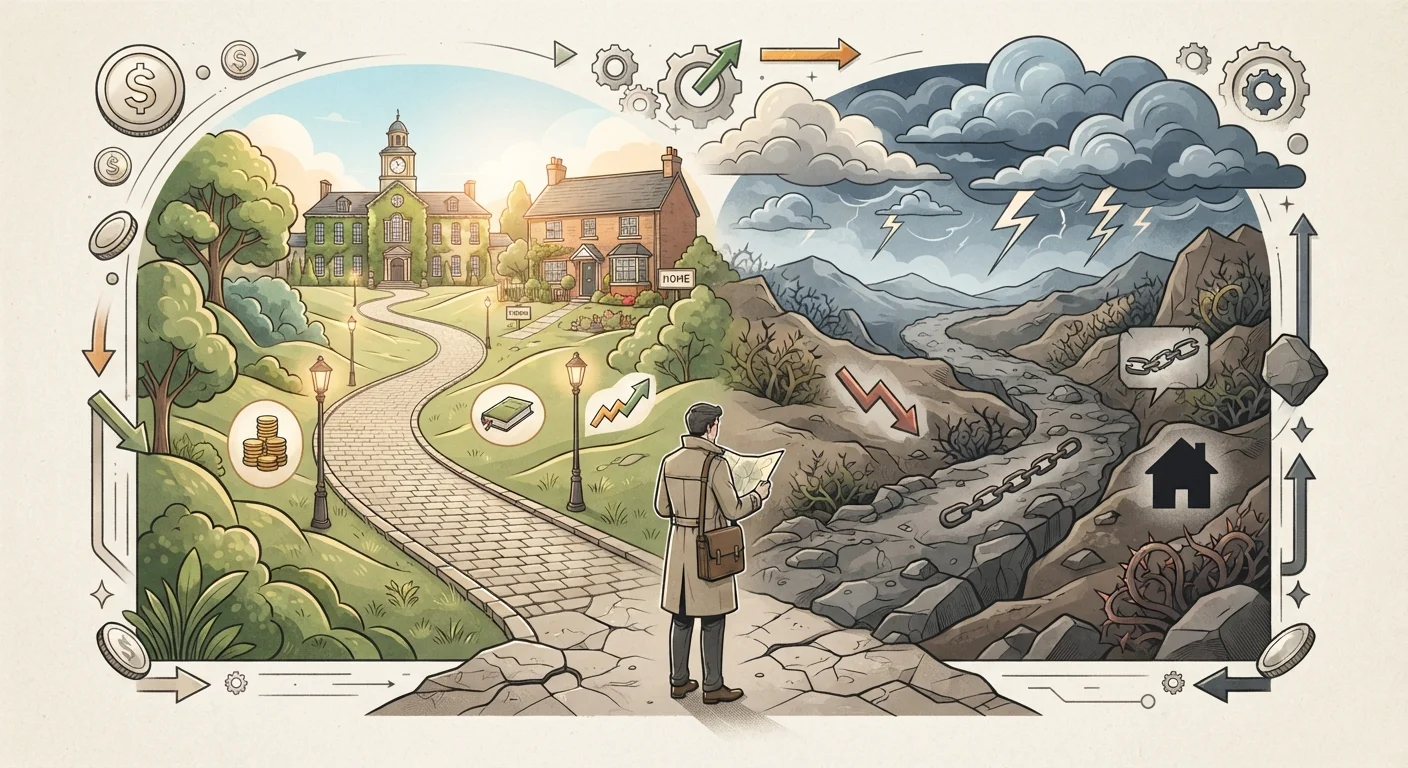
The idea that some debt is "good" and some is "bad" is one of the most repeated concepts in personal finance. At its core, the distinction goes like this: good debt is borrowing that helps you build wealth or increase earning potential over time - think student loans or a mortgage. Bad debt is borrowing for things that lose value or offer no financial return - think high-interest credit card balances on discretionary purchases.
This framing exists because it gives beginners a quick mental filter. Rather than treating all debt as equally problematic or equally harmless, it introduces the idea that context matters. That's genuinely valuable when you're just starting to understand credit. For a deeper look at how debt grows over time, see why debt tends to grow faster than expected.
The Case for 'Good Debt': Where It Holds Up
The logic behind good debt rests on the concept of return on investment. If borrowing money helps you generate more value than the loan costs you, the debt may be financially justified.
- Mortgages: Buying a home can build equity - your ownership stake in the property - over time. Real estate has historically appreciated in many markets, though this is never guaranteed.
- Student loans: Education can increase lifetime earnings potential. For programs that reliably lead to higher-paying careers, borrowing to fund tuition may pay off over time.
- Small business loans: Borrowing capital to start or grow a business can yield returns well above the interest paid, if the venture succeeds.
The common thread isn't just that these debts feel productive - it's that there's a plausible mechanism by which the borrowed money generates future value. That distinction is worth holding onto.
| Good Debt (Typical Examples) | Bad Debt (Typical Examples) | |
|---|---|---|
| Common types | Mortgages, student loans, business loans | High-APR credit cards, payday loans |
| Typical interest rate | Lower to moderate (varies by type) | High to very high (often 20%+) |
| Value of what's financed | May appreciate or generate income | Typically depreciates immediately |
| Potential upside | Equity, earnings growth, business returns | Usually none beyond short-term use |
| Risk if mismanaged | Foreclosure, default, unaffordable burden | Debt spiral, damaged credit, fees |
| Label reliability | Depends heavily on terms and situation | Generally accurate, but exceptions exist |
The Case Against 'Bad Debt': Where It Also Holds Up
High-interest consumer debt - particularly revolving credit card balances - earns its "bad" label for concrete reasons. Annual percentage rates (APRs) on credit cards frequently exceed 20%, meaning unpaid balances compound quickly and become costly to eliminate. The purchases financed often depreciate immediately (electronics, clothing, dining), leaving no residual value to offset the cost of borrowing.
Payday loans are an even starker example: short-term loans with fees that translate to extremely high effective interest rates, frequently trapping borrowers in cycles of rollover borrowing. Understanding how these structures work is covered in more depth in our guide on secured vs. unsecured credit.
Where the Framework Breaks Down
Here's the problem: the label doesn't guarantee the outcome. Debt classified as "good" can become damaging depending on the specifics.
- A mortgage taken on at a high interest rate, with a payment that stretches your budget to the limit, can lead to financial stress or default - regardless of what the asset is.
- Student loans for a program that doesn't improve your earning prospects leave you with debt but no added income to service it.
- Business loans fund ventures that fail. Risk is inherent, and no label removes it.
Meanwhile, some "bad" debt scenarios are more nuanced. Using a credit card with a 0% introductory APR and paying it off within that period costs nothing in interest. A short-term personal loan at a moderate rate might be far less damaging than draining an emergency fund.
What actually determines whether debt helps or harms you includes: the interest rate and total cost, the loan term, how the payment fits your monthly cash flow, and whether the borrowed money genuinely increases your financial position. None of those factors are captured by simply calling something "good" or "bad."
A More Useful Way to Evaluate Debt
Rather than applying a binary label, try asking these questions before borrowing:
- What is the total cost? Calculate how much you'll pay in interest over the life of the loan, not just the monthly payment.
- Does this increase my financial position? Is there a credible, realistic way this debt leads to more income, assets, or savings - or are you funding consumption?
- Can I service it comfortably? The payment should fit within a sustainable budget without crowding out essentials or emergency savings.
- What happens if my situation changes? Job loss, medical expenses, or income drops affect your ability to repay regardless of what the debt was for.
If you're already managing multiple debts, the next practical step is understanding how to prioritize repayment. Two structured repayment approaches - the avalanche and snowball methods - are compared here. For a broader foundation, the complete guide to debt and credit for beginners covers credit scores, interest, and repayment from the ground up.
This article is for general informational and educational purposes only and does not constitute personalized financial, legal, or tax advice. Consult a qualified, licensed financial professional before making significant borrowing decisions.