

Key Takeaways
Credit Score
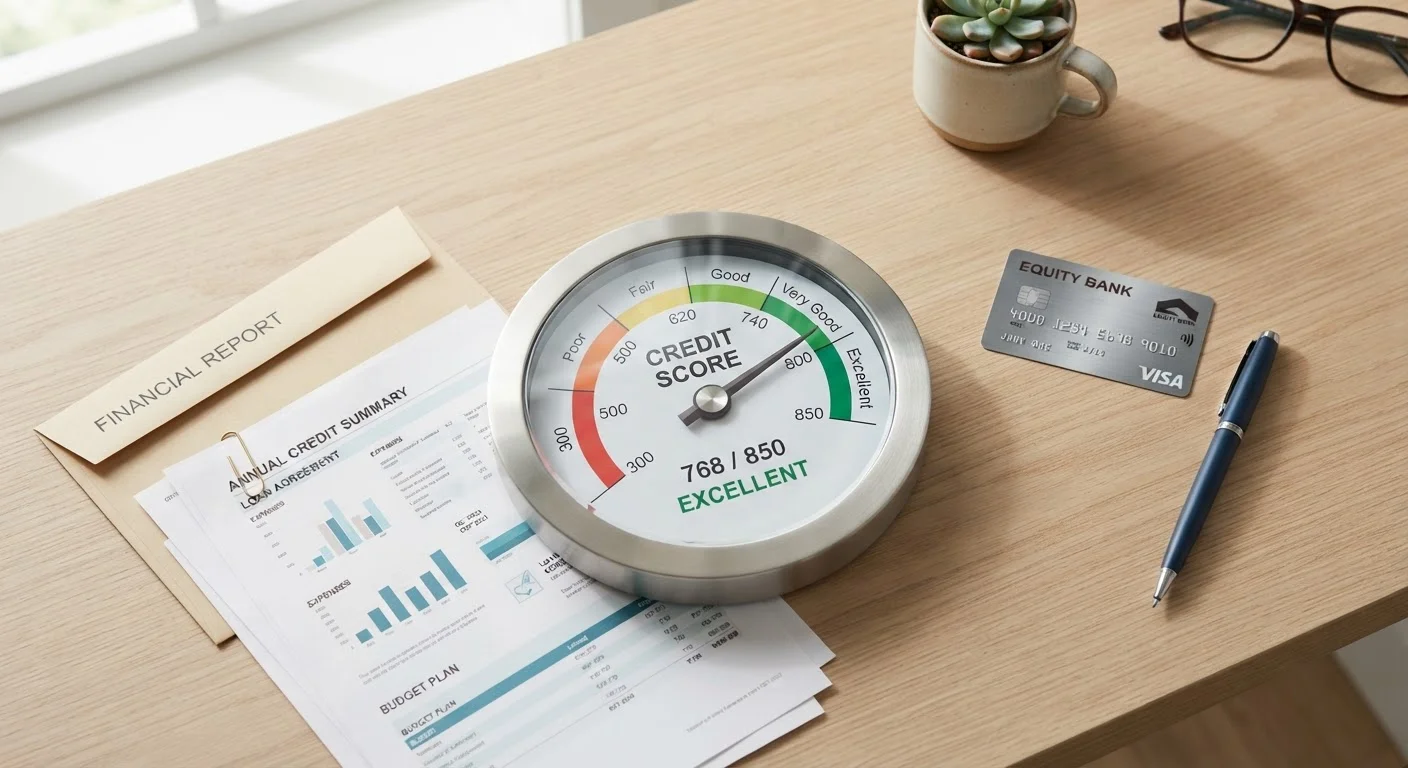
A credit score is a three-digit number - typically ranging from 300 to 850 - that summarizes how reliably you've managed borrowed money. Lenders, landlords, and sometimes employers use it to assess how financially trustworthy you appear. The higher the number, the better your track record looks on paper.
The most widely used scoring model in the U.S. is the FICO® Score, though VantageScore is another common model. Both use similar data but apply different weighting formulas, so scores can vary slightly between models.
Where the Number Comes From
Your credit score is calculated from information in your credit report - a detailed record of your borrowing history maintained by the three major credit bureaus: Equifax, Experian, and TransUnion. Scoring models analyze that data and produce a single number reflecting your credit risk. Before diving deeper, it helps to understand the key credit terms you'll encounter so the numbers make intuitive sense.
The five main factors that shape your FICO Score are:
- Payment history (35%): Whether you've paid bills on time. A single missed payment can drop your score noticeably.
- Credit utilization (30%): The percentage of your available revolving credit you're currently using. Keeping this below 30% is generally recommended.
- Length of credit history (15%): How long your accounts have been open. Older accounts help.
- Credit mix (10%): Having a variety of credit types - credit cards, installment loans - can be a positive signal.
- New credit (10%): Applying for several new accounts in a short period can temporarily lower your score.
35%
Share of FICO Score from payment history
Payment history is the single largest component of a FICO Score, according to the scoring model's publicly disclosed methodology.
716
Average U.S. FICO Score
According to Experian's State of Credit report, the average FICO Score among U.S. consumers has generally hovered in the 'good' range in recent years.
45M+
Americans with no credit score
The Consumer Financial Protection Bureau (CFPB) has reported that tens of millions of Americans are 'credit invisible,' meaning they lack enough credit history to generate a score.
What Each Score Range Actually Signals
FICO Scores fall into bands that lenders use as shorthand for risk. Here's what each range generally means in practice:
| Score Range | Category | What It Typically Means |
|---|---|---|
| 800-850 | Exceptional | Likely to qualify for the most favorable rates |
| 740-799 | Very Good | Strong approval odds; competitive rates |
| 670-739 | Good | Near or above the average for U.S. consumers |
| 580-669 | Fair | May qualify but with higher interest rates |
| 300-579 | Poor | Limited options; secured products may help rebuild |
These ranges are general guides, not guarantees. Each lender sets its own approval thresholds, and your score is just one factor in a lending decision. For a fuller picture of what lenders actually see, consider reading your credit report for the first time.
Why Your Score Matters Beyond Borrowing
Most people associate credit scores with loan applications - and rightly so. A higher score can mean lower interest rates, which translates to real dollars saved over time. The difference between a fair and a good score on a mortgage or auto loan can amount to thousands of dollars across the life of the loan.
But the impact doesn't stop at borrowing. Understanding how credit history shapes opportunities beyond borrowing is equally important. Landlords routinely pull credit reports before approving rental applications. Some insurers in certain states use credit-based insurance scores as one factor in pricing policies. A few employers - particularly in financial roles - may review credit as part of background checks, subject to applicable law.
“Credit scores are not a measure of your worth as a person - they are a statistical tool designed to predict one specific behavior: whether you will repay borrowed money as agreed.”
— Consumer Financial Protection Bureau, U.S. Federal Consumer Finance Regulator
The broader point: your credit score is less a judgment of your character and more a record of patterns. Building good patterns - paying on time, keeping balances manageable - compounds positively over time.
Common Misconceptions Worth Clearing Up
Credit scores carry a lot of mythology. Here are a few persistent misconceptions:
- "Closing old accounts helps my score." Often the opposite is true. Closing an old account can shorten your average credit history and reduce your available credit, potentially raising your utilization ratio.
- "Carrying a small balance builds credit." You don't need to carry a balance month-to-month to build credit - paying your statement balance in full is ideal and avoids interest charges entirely.
- "My income affects my score." Income is not reported to credit bureaus and has no direct effect on your score. High earners can have poor scores; modest earners can have excellent ones.
- "Debit card use builds credit." Debit transactions don't appear on your credit report because you're spending your own money, not borrowing.
Understanding the difference between secured and unsecured credit products can also clarify how different accounts contribute to your score - see our overview of secured vs. unsecured credit for more context.
This article is for general informational and educational purposes only and does not constitute personalized financial or credit advice. For guidance specific to your situation, consult a qualified financial professional.