

Key Takeaways
Builds conscious awareness of every purchase
Writing a transaction by hand forces a pause that digital logging doesn't require, making overspending more visible in the moment.
No technology required - works anywhere
A notebook and pen function without internet access, a charged battery, or an account login, making paper reliable in any situation.
Complete privacy - no data sharing needed
Your spending information stays entirely with you, with no third-party platform involved and no risk of a data breach.
Low barrier to start immediately
You can begin tracking today with any scrap of paper, without setup time, subscriptions, or software to learn.
Steep learning curve for non-technical users
Building formulas, linking cells, and organizing categories requires some familiarity with spreadsheet software that beginners may not yet have.
Initial setup takes significant time
Creating a useful tracking template from scratch - with categories, formulas, and a layout that matches your life - can take several hours before it becomes functional.
Still requires manual data entry
Unlike apps, spreadsheets don't sync with bank accounts, so every transaction must be entered by hand, which introduces the risk of missed or duplicate entries.
Errors can go unnoticed without careful checking
A mistyped number or a broken formula can silently distort your totals, making regular audits of the spreadsheet an important but easy-to-skip step.
Our Verdict
No single tracking method is universally superior. Paper works best when you want to slow down and think deliberately about each purchase. Spreadsheets suit people who want customizable structure and don't mind occasional manual entry. Apps shine for anyone who prioritizes convenience and automation. The real goal isn't the tool - it's the habit of reviewing where your money goes.
This guide is especially useful for budgeting beginners who haven't yet settled on a tracking system and want a clear, honest comparison before committing.
Why Tracking Spending Matters Before Anything Else
Before you can build a budget that works, you need an honest picture of where your money currently goes. Most people significantly underestimate their discretionary spending - on food, subscriptions, and small daily purchases - until they see the numbers written down. That visibility is the starting point for any meaningful change.
If budgeting still feels unfamiliar, our complete introduction to personal budgeting covers the foundational concepts in plain language. Once you understand the basics, choosing a tracking method becomes the practical next step.
Three approaches dominate: writing things down by hand, using a spreadsheet, or relying on a dedicated app. Each has genuine strengths - and real limitations. The right fit depends on your habits, comfort with technology, and how much time you're willing to invest.
Paper Tracking: Deliberate but Demanding
Writing every transaction in a notebook or on a printed worksheet is the oldest tracking method - and for some people, still the most effective. The act of physically recording a purchase creates a moment of reflection that digital tools skip entirely.
Builds conscious awareness of every purchase
Writing a transaction by hand forces a pause that digital logging doesn't require, making overspending more visible in the moment.
No technology required - works anywhere
A notebook and pen function without internet access, a charged battery, or an account login, making paper reliable in any situation.
Complete privacy - no data sharing needed
Your spending information stays entirely with you, with no third-party platform involved and no risk of a data breach.
Low barrier to start immediately
You can begin tracking today with any scrap of paper, without setup time, subscriptions, or software to learn.
The downsides are equally real. Paper offers no automatic calculations, no trend analysis, and no safeguard against lost or damaged records. If you miss a few days, catching up is tedious, and the system can collapse quickly. Paper also makes it harder to spot patterns across weeks or months without manually tallying everything yourself.
Paper tracking pairs well with a weekly review ritual. If you're curious about how small, unnoticed purchases add up over time, see how small spending choices quietly derail a budget.
Spreadsheets: Flexible but Requires Setup
A well-designed spreadsheet sits between the hands-on nature of paper and the automation of apps. Programs like Google Sheets or Microsoft Excel let you build a custom tracking system with categories that match your actual life - not a generic template.
Steep learning curve for non-technical users
Building formulas, linking cells, and organizing categories requires some familiarity with spreadsheet software that beginners may not yet have.
Initial setup takes significant time
Creating a useful tracking template from scratch - with categories, formulas, and a layout that matches your life - can take several hours before it becomes functional.
Still requires manual data entry
Unlike apps, spreadsheets don't sync with bank accounts, so every transaction must be entered by hand, which introduces the risk of missed or duplicate entries.
Errors can go unnoticed without careful checking
A mistyped number or a broken formula can silently distort your totals, making regular audits of the spreadsheet an important but easy-to-skip step.
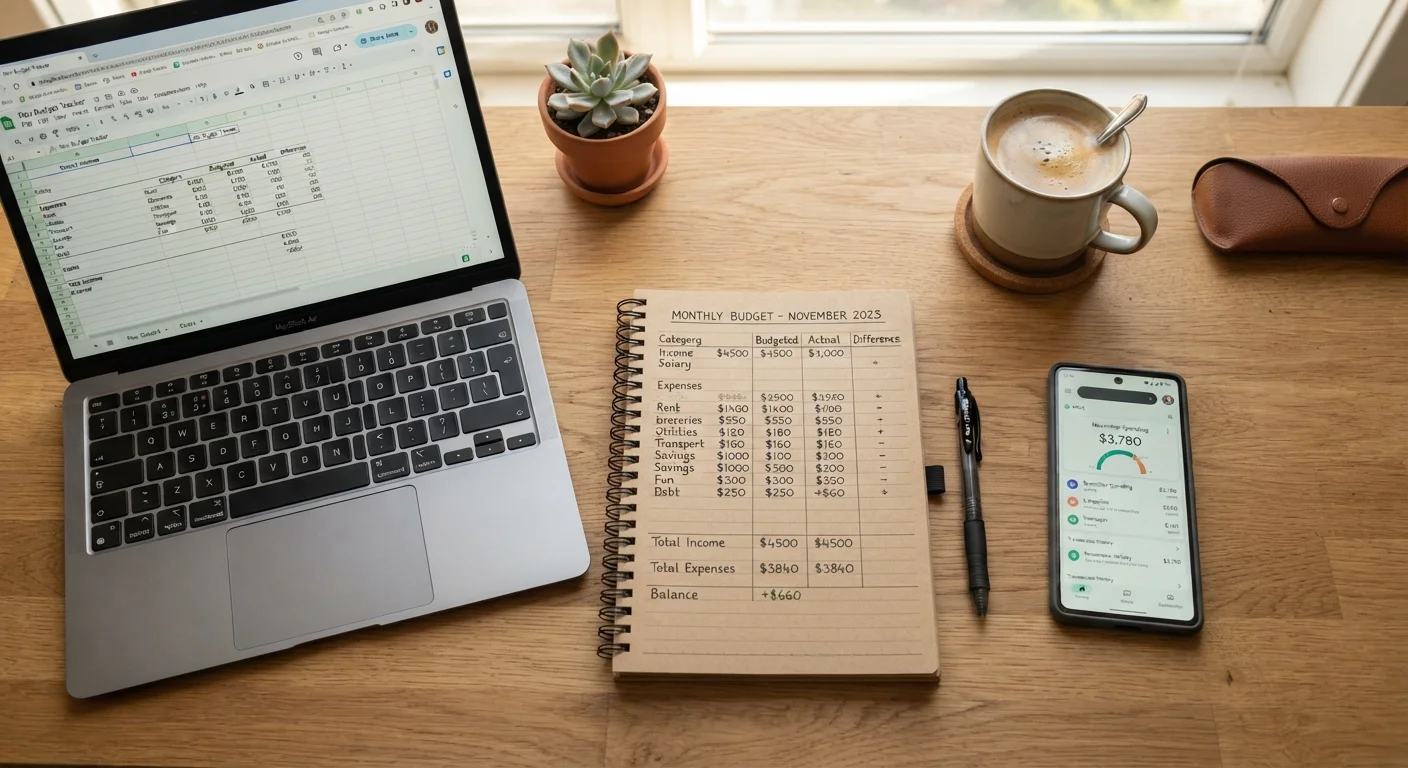
Despite the drawbacks, spreadsheets reward the time invested. Once set up, they can generate monthly summaries, flag overspending in a category, and give you a running total with minimal effort. Many people start with a simple template - income at the top, spending categories below, and a balance row at the bottom - and refine it over time.
For those who want to understand broader spending patterns before building a spreadsheet structure, everyday spending patterns worth noticing is a useful starting point.
Apps: Convenient but Not Fully Hands-Off
Budgeting and spending-tracker apps can link directly to your bank and credit card accounts, categorizing transactions automatically and generating charts of your spending in real time. For anyone who finds manual entry a barrier to consistency, apps dramatically lower the effort required to maintain a tracking habit.
A Note on App Security Practices
When evaluating a budgeting app, look for features like read-only bank access, two-factor authentication, and clear data deletion policies. Many apps use aggregation services rather than storing your credentials directly. Reading the privacy policy before connecting an account takes only a few minutes and can give you a clearer sense of how your data is handled.
The trade-off is privacy and control. Connecting your financial accounts to a third-party app means sharing login credentials or read-access tokens with an external platform. It's worth reviewing an app's privacy policy and security practices before connecting accounts. Additionally, automatic categorization is imperfect - a coffee shop might be labeled "dining" one week and "entertainment" another, requiring periodic corrections.
Apps also vary widely in what they offer for free versus behind a subscription. Evaluate whether the features you actually need require a paid tier before committing.
Choosing the Right Method for You
The honest answer is: start with what you'll actually do. A sophisticated app you open once is less useful than a simple notebook you fill in every evening. Consider these questions before deciding:
- How tech-comfortable are you? If logging in and navigating dashboards feels like friction, paper or a basic spreadsheet may suit you better.
- How many accounts do you manage? Multiple cards and bank accounts become cumbersome to track manually; an app's syncing feature adds real value.
- How much privacy matters to you? Paper and spreadsheets keep your data entirely in your own hands.
- Do you want to understand spending or just record it? Apps offer analysis; paper builds awareness through the act of writing.
1 in 3
Americans who follow a formal budget
Gallup polling has consistently found that only about one-third of U.S. adults maintain a detailed household budget, suggesting that most people track spending informally or not at all.
~$1,500
Average monthly discretionary spending per U.S. adult
Bureau of Labor Statistics Consumer Expenditure data shows substantial discretionary outflows that many people are unable to accurately estimate without a tracking system.
Once you choose a method, the next challenge is building the routine around it. Habits that keep a budget working over the long term offers practical guidance on staying consistent through changing circumstances. And at the end of each month, a monthly budget health check can help you review what your tracking data is telling you.
This article is for general informational and educational purposes only. It does not constitute personalized financial advice. Consider consulting a qualified financial professional for guidance tailored to your individual situation.