

Key Takeaways
Envelope Budgeting
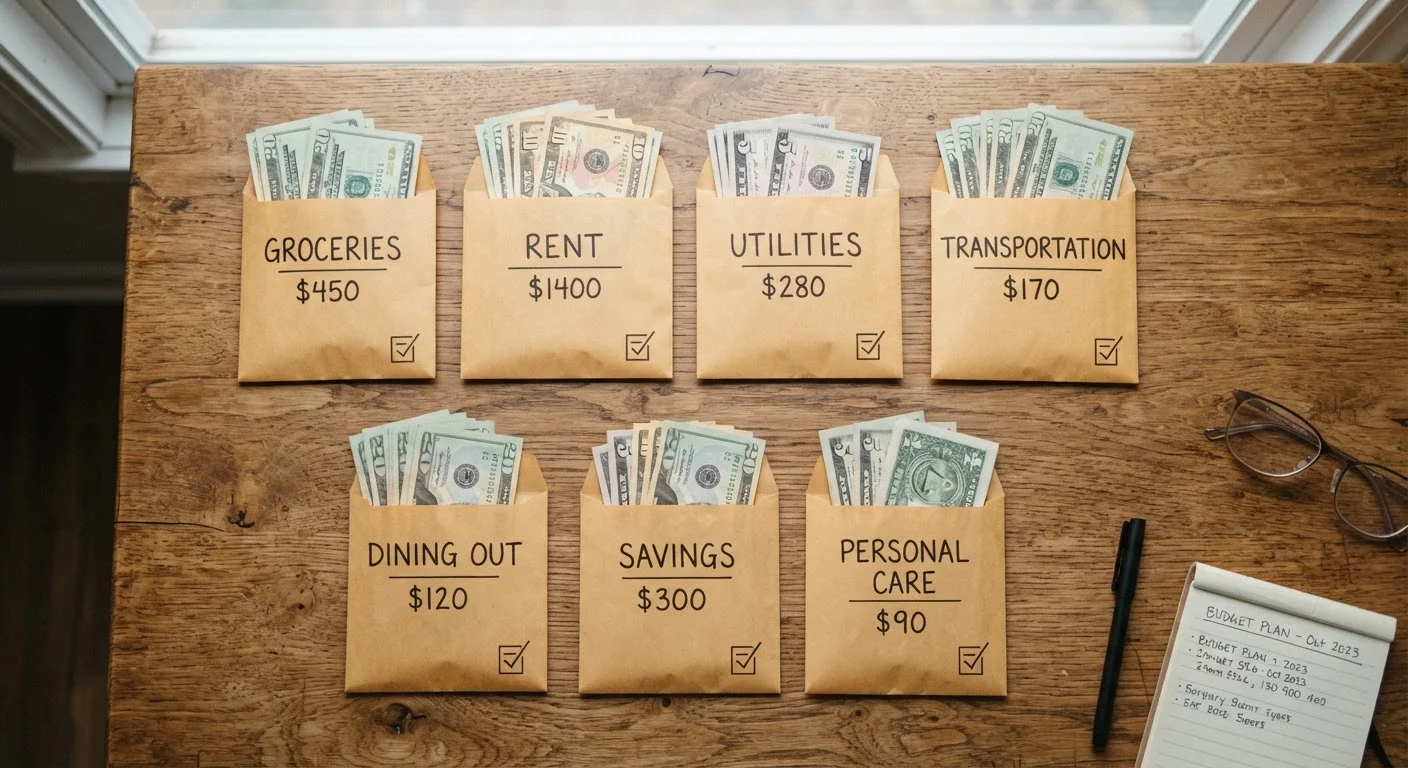
Envelope budgeting is a cash-based method where you divide your monthly income into physical envelopes, each labeled for a specific spending category - such as groceries, gas, or dining out. When an envelope is empty, spending in that category stops until the next budget period. The physical act of handling cash makes your spending limits concrete and immediate.
The system enforces a hard spending constraint by design: unlike a debit card, cash cannot be overdrafted, making overspending in any category immediately visible.
How the Envelope System Works
The mechanics are straightforward. At the start of each budget period - usually when you receive a paycheck - you withdraw cash and divide it among envelopes labeled by spending category. Common categories include groceries, gas, dining out, clothing, personal care, and entertainment. Each envelope receives only the amount you've decided to spend in that area for the period.
When you go grocery shopping, you take money from the grocery envelope and spend only what's inside. When the envelope is empty, grocery spending stops. There is no dipping into other envelopes without a conscious, deliberate choice to do so. That moment of decision is the system's most powerful feature.
Fixed expenses - rent, insurance premiums, subscription services - generally stay out of the envelope system. Those amounts are set aside in your checking account to be paid automatically or by check. Envelopes are reserved for the variable, day-to-day categories where unplanned spending most easily occurs.
If you're new to managing money this way, our introduction to personal budgeting covers the foundational concepts that make any system easier to implement.
Why Physical Cash Changes Spending Behavior
Research in behavioral economics has consistently found that paying with cash feels more immediate than swiping a card. Handing over physical bills activates a sense of loss that digital transactions often bypass. This psychological friction is not a bug in the envelope system - it is the point.
For many people, card statements and banking apps show spending only after the fact. Envelope budgeting moves the awareness to the moment of purchase. You see exactly how much remains before you decide to buy, not hours or days later when reviewing a statement.
“The pain of paying is real - and it's stronger with cash. When money is abstract, as it is with credit cards, the psychological cost of spending diminishes and people tend to spend more.”
— Drazen Prelec, Professor of Management Science and Economics, MIT Sloan School of Management
This real-time feedback loop is particularly valuable for variable categories where small purchases accumulate quickly. A $6 coffee here and a $14 lunch there can drain a dining envelope fast - and the thinning stack of bills communicates that in a way a digital balance often does not.
Who Benefits Most From This Approach
Envelope budgeting suits people who describe themselves as hands-on or tactile learners - those who benefit from a physical, visible system rather than an abstract spreadsheet. It is also effective for anyone who has tried digital budgeting tools and found themselves ignoring alerts or bypassing limits with a few taps.
The system is especially useful for:
- Overspenders in specific categories - someone who consistently goes over on dining or entertainment gains a hard limit they can feel.
- Beginners building spending awareness - handling cash builds a concrete understanding of where money goes each month.
- Households on irregular incomes - allocating cash as it arrives, rather than projecting a full monthly budget, can feel more manageable.
It is less practical for people who make most purchases online, travel frequently, or prefer the security and convenience of cards. In those cases, a digital envelope app or a different framework may fit better. Our overview of seven budgeting frameworks can help you weigh the options.
Setting Up Your First Envelope Budget
Start With Fewer Envelopes Than You Think You Need
New envelope budgeters often create too many categories, which becomes overwhelming to maintain. Begin with four to six envelopes covering your highest-risk spending areas. You can always add more categories once the habit feels natural. Simplicity is what makes the system stick in the early months.
Start by reviewing two to three months of bank or card statements to identify your main variable spending categories and typical amounts. This baseline prevents you from assigning unrealistic amounts to each envelope in month one.
Next, total your take-home income for the period and subtract your fixed expenses. The remaining amount is what you have to allocate across envelopes. Divide that figure among your chosen categories based on your priorities and past spending patterns.
Label each envelope clearly, withdraw the cash, and load them before the period begins. As the month progresses, track any mid-period moves between envelopes - this record helps you refine category amounts over time.
After a few months, most people find their allocations settle into a rhythm. The goal is not perfection in month one but steady improvement in spending awareness. For practices that help sustain any budgeting system over time, see our article on habits that keep a budget working long term.
If your broader goal is building savings alongside spending control, the saving money hub offers additional strategies to layer into your plan.
This article is for general informational and educational purposes only and does not constitute personalized financial advice. Consult a qualified financial professional for guidance tailored to your individual situation.